
Silhouetted figure standing in a dark, futuristic corridor facing a glowing exit

In Search of Solid Ground

Why personas need to evolve, and what to use instead

Some users rush in. Others wait, circling the edges until the ground feels steady beneath them.

We try to capture them in diagrams and bios:

Sarah is a 28-year-old project coordinator who enjoys iced coffee, hiking, and uses her Apple Watch to track productivity.
Matt is a retired transit worker managing a chronic illness who recently started using a smartphone.

But these aren’t people. They’re fragments. Sketches of behaviour, stitched together from research and assumptions. Useful, maybe. But rarely enough.

They let us say, “We’ve considered our users,” without actually including them.

They feel like empathy. But they aren’t.

And for users looking for something they can trust, that false footing can be the reason they leave.

🧠 Most Personas Aren’t Wrong. They’re Just Not Enough.

I’m not here to cancel personas. I’m here to scale them back to what they really are.

Think of a persona like a storyboard: useful early on, risky if mistaken for reality. They’re sketches. Vibes. Starting points.

They are not:

  • Substitutes for actual user voices
  • Sufficient for inclusive design
  • A way to understand complex systems like trauma, poverty, or digital exclusion

Too often, personas reduce identity to utility. But users aren’t “goals and pain points.” They’re shaped by power, constraint, and context—things no template can capture.

🔍 Why We Keep Using Personas (Even When They Fail)

Here’s the truth. Personas stick around not because they work, but because they’re easy.

  • Easy to sell to stakeholders
  • Easy to build without real research
  • Easy to blame when things go wrong

They offer plausible deniability. If the product fails, it’s not because you misunderstood users. It’s because the persona did.

This is what Sasha Costanza-Chock, author of Design Justice, warns against: when tools meant to include end up reinforcing power structures by speaking about communities rather than with them.

That’s not inclusive design. That’s just design theatre.
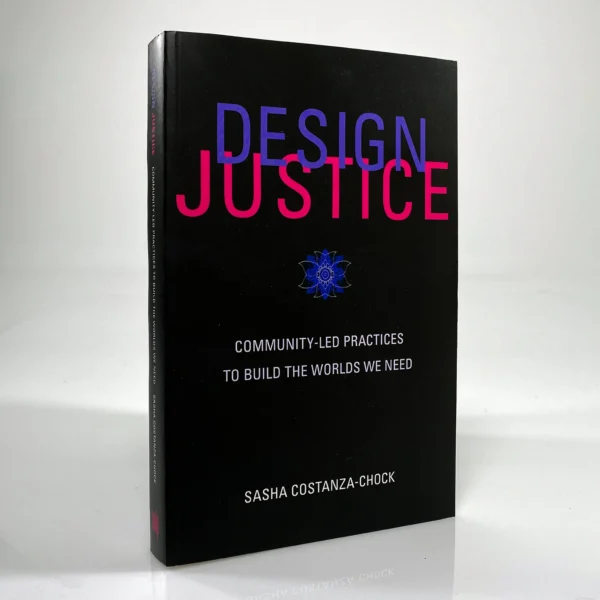
 

Cover of the book Design Justice: Community-Led Practices to Build the Worlds We Need by Sasha Costanza-Chock, featuring bold typography on a black background.

Design Justice by Sasha Costanza-Chock reminds us that inclusive design isn’t about imagining others—it’s about including them. A key influence behind this article’s critique of assumed empathy and performative personas.

🏢 This Isn’t Just a Design Problem

Let’s be clear. This isn’t just on designers.

Personas get passed around like currency, copied from deck to deck until no one remembers where they came from.

Product managers use them to justify roadmaps. Marketers use them to shape messaging. Executives use them to greenlight features. Researchers use them as placeholders.

The result is consensus built on very little truth. Cross-functional accountability means questioning the persona, not just referencing it.

Ask:

  • Where did this come from?
  • Does it reflect our users, or old assumptions?
  • Whose voices are missing?

If no one is asking those questions, everyone is part of the problem.

🛠 What to Use Instead

Here’s what has worked better in my practice:

🧭 Behavioural Archetypes Over Biographical Caricatures

Shift from identity to interaction. Don’t ask who someone is. Ask how they engage with your product.

  • Power scanner
  • Skeptical returner
  • Voice-first navigator
  • Option avoider

These reflect observable patterns, not imagined backstories.

🌐 Situational Signals Over Static Profiles

Design isn’t just about the user. It’s about their environment.

Time of day. Screen glare. Shared devices. Bandwidth anxiety. Stigma.

You can’t persona your way into these realities. You have to map them.

We use context blocks—short, real-world scenarios that help teams design for friction, not fiction. Inspired by field notes and accessibility stress cases, not made-up bios.

🤝 Lived Experience Panels Over Assumed Empathy

There’s no ethical substitute for co-design.

Especially when your product intersects with trauma, marginalisation, or disability.

Trauma-informed design, adapted from health care and social work, reminds us that safety, trust, choice, and empowerment must shape how we build.

You can’t simulate that. You have to invite it.

🔬 Borrowing from Other Fields Makes Us Better Designers

Victor Papanek, in Design for the Real World, wrote:

There are professions more harmful than industrial design, but only a very few of them.

He wasn’t exaggerating.

Design choices shape the options people have—especially those with the fewest resources.

That’s why we need to look outside our Figma files and roadmaps.

  • From ethnography, we learn that people don’t act in isolation. They’re shaped by systems.
  • From algorithmic profiling, we learn that fake personalisation can cause real harm. Predictive models pretend to “know” us but often reinforce bias. Personas can do the same.
  • From accessibility, we learn that designing for edge cases benefits everyone. Exclusion isn’t a bug. It’s a signal.
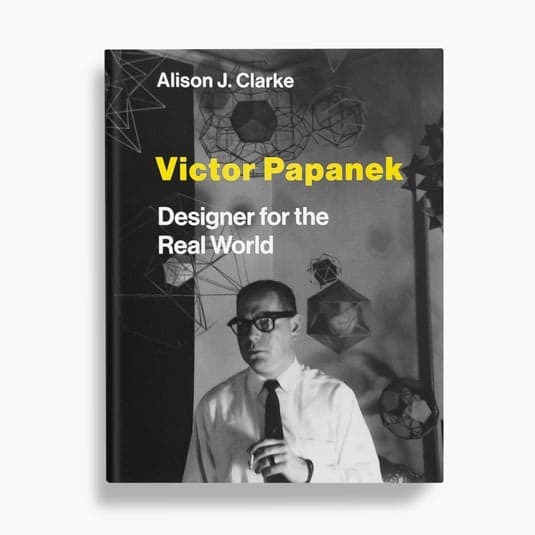
 

Cover of the book Victor Papanek: Designer for the Real World by Alison J. Clarke, featuring a black-and-white photo of Papanek surrounded by geometric models.

Victor Papanek’s philosophy challenged designers to confront the real-world impact of their work. His legacy calls us to design not just for users, but with responsibility, humility, and intent.

🧱 Personas Were a Starting Point. But We Stopped Moving.

The original goal of personas was to humanise users. But over time, they became branding exercises.

A stock photo. A quote. A fictional name.

You don’t need to throw them out. Just stop treating them as truth.

If your persona doesn’t help you:

  • Predict behaviour
  • Design for constraints
  • Challenge bias
  • Include excluded voices

Then it’s not a tool. It’s a performance.

🧭 Grounded Design Starts with Listening

Designing for real people starts when we admit we don’t already know them.

It starts with context. With co-design. With discomfort.

It starts outside the template.

And maybe, if we’re doing it right, it ends with something better than a sketch of someone we never met.

✅ Download the Template

You can download the Trust-First Explorer as a Notion template.

It includes behavioural signals, context blocks, real-world constraints, and design implications—ready to plug into your product or research workflow.

→ Steal This Persona
Ready to leave behind fake empathy and coffee-loving caricatures? The Trust-First Explorer is a free Notion template built for behaviour-led, context-aware design. No signups, no fluff—just something you can actually use in your next sprint.

Whether you’re building a design system, rethinking onboarding, or trying to understand the humans behind your bounce rate, this persona was made for you.