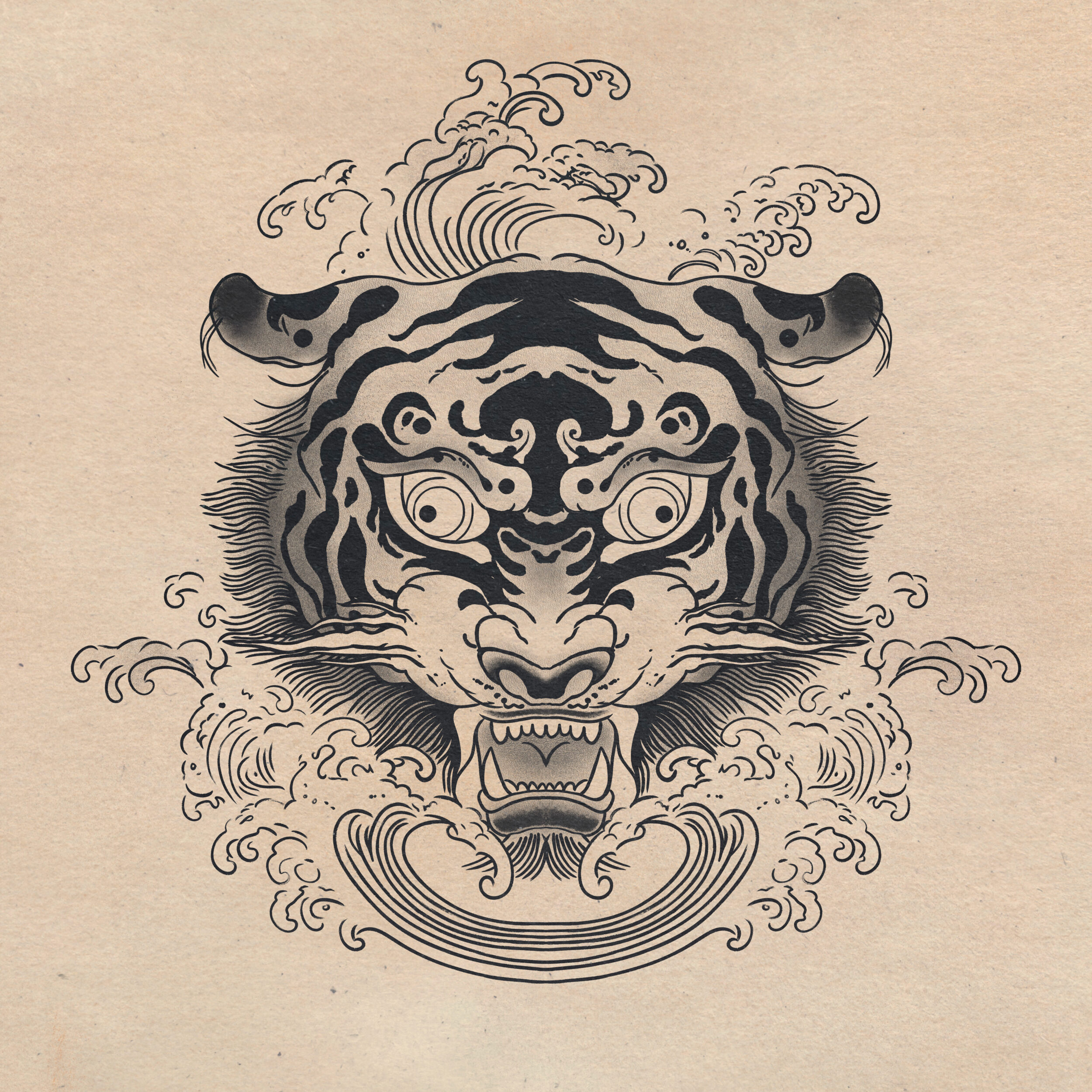
Stylized ink illustration of a roaring tiger with flowing tendril-like whiskers, inspired by East Asian mythological art and traditional sumi-e linework

Hōge no Tora (髯毛の虎)

Hōge no Tora explores the intersection of anatomy and symbolism through 髯毛 (hōge)—tendril-like whiskers found in East Asian visual traditions. Neither cloud nor flame, these forms appear in Song dynasty dragon scrolls, karajishi temple guardians, and Daoist beast paintings, where facial tendrils function as both structure and aura.

The whiskers here echo the brushstroke logic of sumi-e and irezumi linework, where physical features often dissolve into gesture or energy. I was interested in how something as minor as a whisker could carry tension, motion, and awareness.

Rather than frame the tiger as a symbol of brute force, I treated it as a form suspended between stillness and sentience. The composition draws on the rhythm of emaki (narrative scrolls) and Edo-period lacquer design, where beasts emerge mid-movement—coiled between intent and inertia.

The title, Hōge no Tora, borrows from naming conventions in bestiaries and esoteric scrolls, where stylized traits elevate an animal into iconography.